by | | RIG Blog Posts
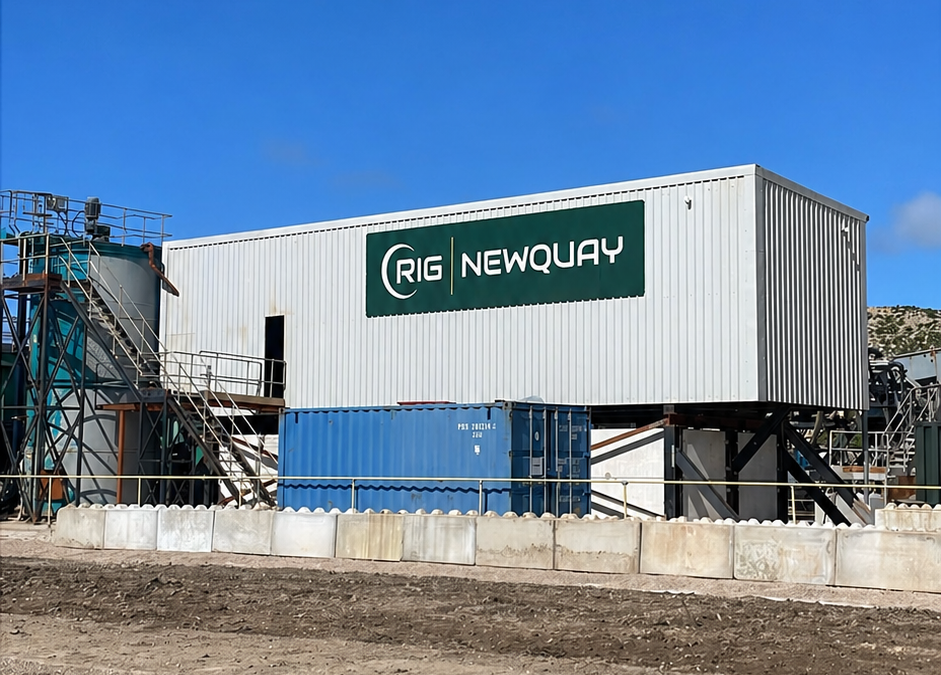
Recycle it Global Ltd is proud to announce that RIG Newquay is now operational, marking a significant milestone in our continued growth across the South West.
Located to serve North Cornwall, the site plays a key role in meeting the increasing demand for high-quality washed recycled materials, while delivering sustainable waste management solutions that protect our natural resources.
RIG Newquay complements our existing operations, including RIG Scorrier in Redruth, strengthening our ability to support clients across Devon and Cornwall with efficient, responsible material recovery and supply.
The site’s state-of-the-art wash plant is now fully operational, creating local employment opportunities and advancing waste treatment capabilities in the region. By diverting waste from landfill and reprocessing it into valuable secondary aggregates, RIG Newquay supports a more circular approach to construction materials in the South West.
Paul Nicholls, Chief Executive Officer of RIG, said:
“Opening RIG Newquay is a major step forward in scaling our approach to sustainable resource management. This site enables us to increase our impact, diverting more waste from landfill and producing high-quality recycled aggregates for the region. It’s a testament to the hard work of the team and our long-term commitment to building a circular economy solution for the UK’s mineral needs.”

by | | RIG Blog Posts
Recycle It Global is excited to be exhibiting at this year’s Royal Cornwall Show, taking place from Thursday 4 to Saturday 6 June 2026 at the Royal Cornwall Events Centre in Wadebridge.
The show is one of Cornwall’s biggest annual events, bringing together agriculture, business, local communities, food, entertainment and family fun across three packed days.
For RIG, the Royal Cornwall Show is a fantastic opportunity to connect with customers, suppliers, local businesses and families from across Cornwall and the South West.
Come and meet the RIG team
Visitors to the RIG stand will be able to meet members of our team, ask questions, and find out more about the wide range of services and products we offer across our sites.
Whether you are a farmer, builder, contractor, holiday let owner, local business or homeowner, our team will be on hand to talk through how we can help.
Jesse, Sales Director at RIG, said:
“The Royal Cornwall Show is a brilliant opportunity for us to meet people face to face and talk through the different ways RIG can support them. Whether someone needs agricultural sand, aggregates for a building project, or waste collection services for a holiday let or business, our team will be there to offer practical advice and point them in the right direction.”
Explore our products, services and applications
We will be showcasing our aggregate products, as well as services including:
Our stand will give visitors the chance to see how RIG supports a wide range of applications, from construction and landscaping through to agriculture, waste management and domestic projects.
Oscar, Chief Technical Officer at RIG, said:
“Many people know RIG for one part of what we do, but the Royal Cornwall Show gives us the chance to show the full picture. From material recovery and naturally recovered aggregates through to technical applications and compliant waste solutions, we are looking forward to helping visitors understand how our services can support more sustainable and practical outcomes across Cornwall.”
Enter our competition to win a £750 holiday voucher
As part of this year’s show, we will also be running a competition where visitors can enter for the chance to win a £750 holiday voucher (with thanks to Classic Cottages for their kind gift).
Whether you are dreaming of a family break, a weekend away or some well-earned time to relax, make sure you visit the RIG stand and enter while you are at the show.
Fun for the whole family
It will not just be about aggregates and waste services. We will also have activities for younger visitors, including a fun dig for treasure experience.
It is a great way to keep little ones entertained while parents, grandparents and visitors have a chance to chat to the team and learn more about what we do.
Supporting Cornwall’s rural and business community
The Royal Cornwall Show has a long history of celebrating agriculture, local enterprise and community in Cornwall. For RIG, being part of the show is an important opportunity to support that wider community while raising awareness of the practical, sustainable services we provide across the region.
From helping farmers source quality materials, to supporting builders and contractors with aggregates, to providing reliable waste collection options for holiday lets, businesses and households, our work is closely connected to the everyday needs of people across Cornwall.
Visit us at the show
We are looking forward to welcoming visitors to our stand throughout the three-day event.
Come along, meet the team, explore our products and services, enter our holiday voucher competition, and enjoy a fun day out at one of Cornwall’s biggest annual event.
We look forward to seeing you at the Royal Cornwall Show 2026.

by | | RIG Blog Posts
In a recent podcast, Paul Nicholls, CEO, shared the story behind RIG, and the thinking that continues to drive it forward.
At its core, RIG was built around a simple but powerful idea: complex waste doesn’t have to be a problem. With the right expertise, infrastructure, and mindset, it can become a valuable resource.
That approach has shaped how the business has grown. Rather than following a traditional waste model, we have focused on developing the capability to process challenging materials and convert them into high-quality, certified recycled aggregates, supporting both environmental and commercial outcomes.
Building a circular approach
A key theme throughout the conversation was the importance of the circular economy, not as a concept, but as a practical, day-to-day reality.
For us, this means:
- Recovering value from materials that would otherwise go to landfill
- Reducing reliance on virgin resources
- Supporting construction and infrastructure projects with sustainable alternatives
It’s a model that requires investment, innovation, and a willingness to challenge traditional ways of working, but one that delivers long-term impact.
Growth through capability
The podcast also highlighted how we have expanded over time, building its footprint and expertise to handle increasingly complex waste streams.
This growth hasn’t been about scale alone. It’s been about strengthening capability:
- Developing advanced processing solutions
- Maintaining high standards of compliance and quality
- Creating a reliable, end-to-end service for customers
That combination is what enables us to take on materials others can’t and turn them into something useful.
Looking ahead
The conversation reinforced a wider shift happening across the industry. Resource recovery is no longer secondary considerations, they are central to how construction and infrastructure projects are delivered.
For businesses, that means working with partners who can provide both practical solutions and trusted outcomes.
Our focus remains the same: taking complex waste streams, applying the right expertise, and turning them into something of real value.
Listen to the full episode
You can listen to the full episode here.
Thank you to CheckProof for inviting us to be part of the conversation. It was a great opportunity to share more about what we do and the role RIG plays in supporting a more sustainable, circular approach to construction.
by | | RIG Blog Posts
At RIG, we know that sand isn’t just sand.
Whether you’re managing a construction site, maintaining an equestrian arena, preparing a golf course, or running a busy agricultural operation, performance, consistency and reliability matter.
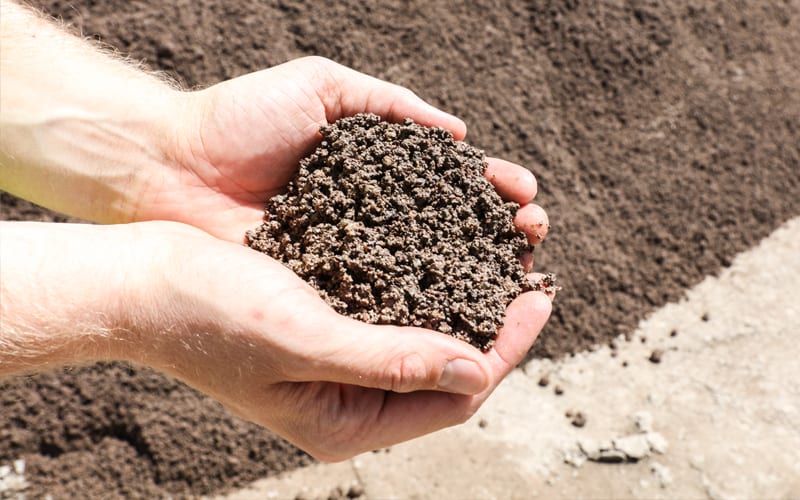
That’s why we’ve invested in improving our naturally recovered sand process, delivering a product that works harder across multiple applications while supporting more sustainable material choices.
What’s changed, and why it matters
Our upgraded sand benefits from enhanced washing and processing, resulting in less than 3% ultra-fines (particles smaller than 63 microns), lower organic content, a drier material with controlled moisture levels, and a more consistent particle grading across every load.
These improvements aren’t just technical details; they directly influence how the material performs in real-world applications.
From a materials science perspective, reducing ultra-fines improves permeability, allowing water to drain more freely rather than being retained within the structure of the material. Lower organic content reduces the risk of decomposition over time, which can otherwise impact stability and lead to inconsistent performance. By controlling particle size distribution, we achieve better compaction behaviour and improved load-bearing capability, while a drier product makes handling, spreading and transport far more efficient.
The result is a sand that behaves much more like a primary aggregate, predictable, stable and fit for purpose.
Equestrian: managing impact and drainage
In equestrian surfaces, the balance between shock absorption, drainage and consistency is critical.
Particle shape and grading play a key role in determining shear strength and hoof stability, helping to create a surface that feels secure underfoot. With fewer fines, the material retains less water through capillary action, reducing the risk of waterlogging and uneven conditions. Consistency across loads also helps prevent patchy compaction, which can contribute to instability or injury risk.
The outcome is a surface that offers both firmness and cushioning, supporting horse welfare as well as day-to-day performance.
Construction: Predictable compaction and strength
In construction, sand plays a critical role in applications such as mortar, render, concrete mixes and service trench backfill, where consistency and predictability are key to achieving the right result.
The performance of sand in these applications is heavily influenced by its grading, moisture content and cleanliness. By controlling particle size distribution, we help ensure more reliable mix ratios, reducing the risk of variation in strength, finish or workability. Lower levels of ultra-fines prevent mixes from becoming overly cohesive or “sticky,” making them easier to work with while maintaining the intended performance.
Reduced organic content is also important, as it helps avoid contamination that can interfere with cement hydration and long-term durability. At the same time, a drier material improves batching accuracy, meaning you’re not unknowingly introducing excess water into your mix, something that can impact both strength and curing.
The result is a sand that delivers consistent behaviour across mortar, render and concrete applications, helping teams achieve a more uniform finish, reduce rework, and maintain confidence from load to load.
Golf Courses & landscaping: Drainage and surface quality
In landscaping and sports surfaces, both drainage and visual finish are essential.
By reducing fines, the sand achieves better hydraulic conductivity, allowing water to pass through rather than sitting on the surface. Consistent grading supports an even settlement, which is key to achieving a uniform, high-quality finish. At the same time, lower organic content helps prevent degradation, maintaining the integrity of the surface over time.
The result is a cleaner, more reliable material that performs consistently across seasons.
Agriculture: Moisture management and hygiene
In agricultural settings, sand performance is closely linked to moisture control and cleanliness.
Lower water retention helps maintain drier bedding and yard environments, making day-to-day management easier and more efficient. Reduced organic content also plays an important role in limiting bacterial growth, supporting cleaner and more hygienic conditions for livestock. Consistency in the material ensures it performs reliably across a range of uses, from bedding to backfill.
This creates a practical, dependable solution that supports both livestock wellbeing and operational efficiency.
Why recycled doesn’t mean compromised
There’s often a perception that recycled materials come with trade-offs, but modern processing tells a different story.
Advanced wash plants are designed to remove contaminants and tightly control fines, while rigorous testing ensures materials meet required specifications. Where needed, traceability supported by site investigation and ground investigation data adds further confidence in material provenance and suitability.
In many cases, naturally recovered sand can offer equal, and often more consistent, performance than some natural sources, particularly where variability in primary materials is higher.
Try it for yourself
We know that performance matters most when you see it in action.
That’s why free samples are available, giving you the opportunity to trial our upgraded sand in your own environment, whether that’s an arena, site, course or farm.
If you’d like to find out more or arrange a sample, please contact Rachel Young on 07849 645483 or email rachel.young@rig-uk.com

by | | RIG Blog Posts
A recent industry article has raised concerns about whether recycled aggregates could contribute to future “mundic” issues in Cornwall.
Mundic has understandably left a lasting legacy in the region, and any discussion about material quality in construction deserves to be taken seriously. However, it is equally important that conversations are grounded in current regulation, modern testing standards, and robust production processes.
We understand why mundic remains a sensitive topic in our region. However, we are equally passionate about the role recycled aggregates can play in sustainable construction, and when produced responsibly, they do not pose mundic-related risks.
Understanding the Regulatory Framework
Today’s recycled aggregate production operates in a completely different world from the practices of decades past. This includes;
- Robust regulation – The UK waste management framework requires formal classification, testing and documentation before materials can be processed or reused.
- Advanced technology – Modern washing, separation, and processing equipment that didn’t exist 30 years ago
- Rigorous testing – Laboratory analysis at every stage of production
- Complete traceability – Every load tracked from source to site
At RIG, we require appropriate classification and investigation information before accepting material. This ensures we understand precisely what is entering our facility and confirms it meets inert waste criteria.
The Source of Our Materials
Some waste streams, such as historic demolition rubble, made ground, or legacy mining materials, require particularly careful assessment and management. We work primarily with:
- Clean, inert soil and stone
- Virgin subsoil from new developments
- Materials backed by comprehensive ground investigation data
What we don’t use: Historic mining waste, contaminated fill, or any materials with unknown origins.
This isn’t just company policy – it’s fundamental to producing aggregates that meet modern construction standards.
Modern Production & Quality Control
Producing high-quality recycled aggregates suitable for use in concrete is technically complex. It requires:
- Advanced washing and separation technology
- Strict input controls
- Ongoing laboratory testing
- Documented quality assurance procedures
In addition to regulatory compliance, RIG undertakes Alkali-Silica Reactivity (ASR) testing on materials.
ASR testing assesses the potential for reactive constituents that could lead to deleterious expansion in concrete. Throughout our operational history, RIG has not recorded ASR results approaching levels that would present a structural concern.
Geological Context
Cornwall’s geology is varied and historically linked to mining activity. It is therefore correct that certain mineralised materials can present risks if improperly assessed.
However, modern aggregate production is not comparable to historic building practices that gave rise to mundic-related structural failures decades ago.
Today’s regulatory controls, testing regimes, and documented supply chains provide a completely different level of oversight.
Responsible Industry Dialogue
It is vital that public and industry conversations remain balanced, evidence-led, and technically accurate.
Responsible recycling plays an essential role in:
- Less primary quarrying – Preserving our natural landscape
- Lower carbon emissions – Shorter transport distances, reduced processing
- Circular economy growth – Keeping resources in productive use
- Local job creation – Supporting our community’s economy
At RIG, we remain confident in the suitability and compliance of our products. We are always happy to discuss our processes, testing protocols, and quality controls with customers, engineers, and regulators.
If you would like further technical information, or to learn more about how modern recycled aggregates are produced and tested, please contact our team.